
Therapeutic Massage for Muscle Tension
Therapeutic massage for muscle tension helps reduce pain, restore mobility, and calm the nervous system for lasting relief and recovery support.
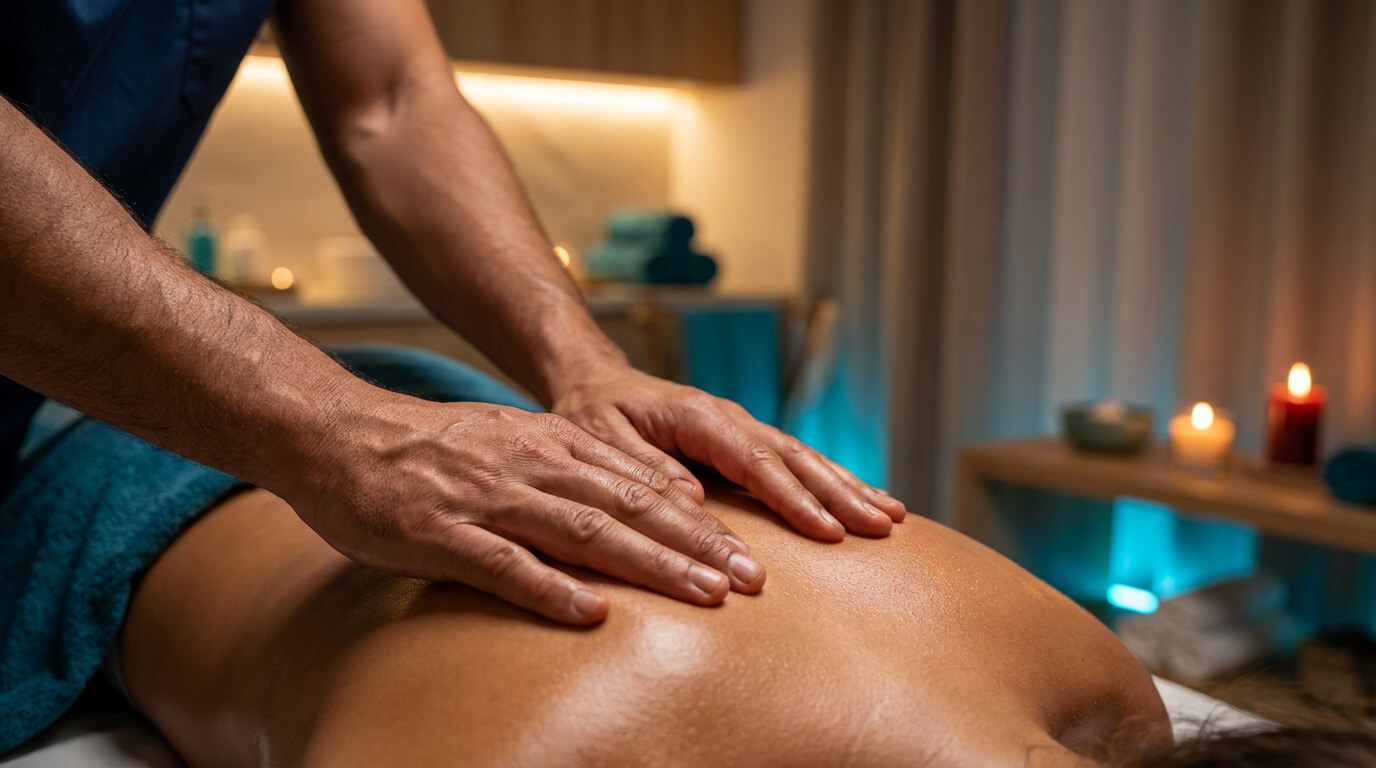
You feel it before you fully register it. Your shoulders start creeping upward during work. Your head stops turning to the side easily. Your arm doesn’t lift as much as it used to. Your hamstrings feel tense after a training run in the renovated Strovolos track, or your lower back stays guarded long after the work day is over.
Therapeutic massage for muscle tension at INTUNE is not simply about easing discomfort for an hour. It is a practical way to help the body reset, reduce protective holding patterns, and return to a more natural state of mobility and flow.
Muscle tension is rarely just one thing. Sometimes it comes from posture, long time in front of your computer, stress, poor sleep, or a demanding training schedule. Sometimes it is the aftereffect of injury, under-recovery, or a nervous system that has been running too high for too long. That is why effective treatment should do more than press on sore areas. It should read the body accurately, understand what is driving the tension, and apply the right level of therapeutic input.
What therapeutic massage for muscle tension actually does
When muscles stay tight, they often do so for a reason. The body may be trying to stabilize an overloaded area, compensate for restriction elsewhere, or protect itself from stress and fatigue. Therapeutic massage works by improving tissue quality, increasing local circulation, reducing guarding, and giving the nervous system a signal that it is safe to let go.
Tension is not always resolved by force. In fact, aggressive pressure can sometimes make the body brace more, especially when someone is already stressed, inflamed, or highly sensitive. Skilled therapeutic work is more precise than that. It blends depth with timing, follows the condition of the tissue, and adjusts to what your body can accept at this moment.
An athlete who just finished a Troodos Terra 42K+ race with over 2,000m of elevation or a triathlete who just came back from Athens Marathon require a different therapeutic approach from someone who is in the middle of training or has a back tension due to predominantly sitting position in the office.
At INTUNE we take a holistic approach. We look at what the person is going through, what causes the issue and identify the right therapy.
The result is often more than temporary relief. You may notice easier movement, less pulling through the neck and shoulders, better hip or back mobility, reduced headache frequency, improved recovery after exercise, and a clearer sense that your body is working with you instead of against you.
Why muscle tension builds in the first place
Tight muscles are often blamed on posture alone, but that explanation is too narrow. Posture can contribute, especially if your work keeps you seated or fixed in one position for long stretches. Still, tension usually builds through a combination of load, habit, stress, and compensation.
For working professionals, the pattern often shows up as neck stiffness, jaw tension, shoulder heaviness, forearm fatigue, and lower back compression. For active clients and athletes, it may show up as tight calves, overworked hip flexors, heavy legs, restricted thoracic rotation, or recurring glute and hamstring tightness. In both cases, the nervous system plays a major role. When stress remains elevated, muscles tend to hold more tone, breathing becomes shallower, and recovery becomes less efficient.
This is why rest alone does not always solve the issue. You can stop training for a few days or take a weekend off work and still feel bound up. The body may need hands-on input to interrupt the pattern.
When therapeutic massage is the right fit
Therapeutic massage for muscle tension is especially useful when tightness starts affecting how you move, sleep, train, or focus. If you stretch constantly but still feel restricted, if your usual pressure points keep returning, or if stress is showing up physically in your body, massage can help recalibrate the system.
It can also be appropriate when your tension is broad and layered rather than linked to one isolated sore spot. For example, neck pain may be connected to chest restriction, shoulder loading, rib tension, and breath pattern changes. Lower back tightness may be tied to glute inhibition, hip stiffness, or fatigue through the mid-back. A therapeutic session looks at these relationships instead of chasing pain in a single area.
Massage limitations
Massage therapy has its limits, too. It may not be the right choice for every type of pain. Massage is not recommended if you are dealing with an acute injury, severe inflammation, a fever, an infection, or a strong sunburn after a long beach day under the Cyprus sun.
When athletes wait until the pain is impossible, it is often too late to go for a massage.
Good care includes knowing when bodywork is helpful and when another route is more appropriate.
How a treatment should feel
A common misconception is that effective massage must be intensely painful. Some areas of muscular tension can feel tender during release, but treatment should still feel purposeful, tolerable, and responsive. If your body is fighting the pressure, the work may be too much for that moment.
A well-structured session often starts by assessing where the body is holding, how tissues respond, and what kind of pressure creates change without triggering resistance. Some people need slower, grounding work first so the nervous system can settle. Others benefit from more focused therapeutic techniques to address denser areas of restriction.
This is one of the clearest differences between generic relaxation massage and outcome-led treatment. Relaxation has real value, especially for stress reduction, but therapeutic work is guided by function. The aim is not just to feel good on the table. It is to help you move, recover, and live with less strain afterward.
Therapeutic massage for muscle tension and the nervous system
One reason massage can be so effective is that muscle tension is not only mechanical. It is neurological. Your muscles respond to signals from the nervous system, and when that system is overstimulated, guarded, or fatigued, tissues often remain in a low-grade state of contraction.
This is why clients under heavy mental load often feel physically dense even without unusual exercise or obvious strain. Their body has not had enough space to downshift. Therapeutic massage helps create that shift. Through skilled touch, steady pacing, and appropriate pressure, the body can move out of a constant defensive state and into one where repair is easier.
This does not mean one session fixes everything. If your tension has built over months or years, it usually responds best to consistent care combined with changes in load, movement, hydration, recovery, and sleep. But one session can create meaningful change, especially when the treatment matches the underlying pattern.
What areas respond well to treatment
The most common tension zones are the neck, shoulders, upper back, lower back, hips, and legs. Each region has its own story.
Neck and shoulder tension is often linked to desk posture, driving, stress, and shallow breathing. Clients usually describe it as heaviness, stiffness, or a sense that the shoulders never fully drop. Treatment here should address not just the upper traps, but the surrounding support structures that keep the area overloaded.
Lower back tension can come from prolonged sitting, physical work, unstable core mechanics, or compensation from the hips and glutes. Direct work on the lower back may help, but better results often come when the surrounding chain is treated as well.
Leg tension tends to show up in runners, gym-goers, and anyone on their feet for long periods. Calves, hamstrings, quads, and hip flexors can all hold residual load that affects stride, squat depth, balance, and post-exertion recovery. In these cases, therapeutic massage supports both performance and restoration.
How often should you get massage for tight muscles?
It depends on how long the tension has been present, how intense it is, and what keeps feeding it. If you are dealing with chronic tightness, high stress, or a physically demanding routine, a short series of sessions often works better than a one-off appointment. Consistency helps the body absorb change instead of resetting back to familiar patterns.
For maintenance, many people do well with regular sessions spaced according to lifestyle and load. During more demanding periods, such as heavy training cycles, intense work stress, or travel, more frequent treatment can be useful. During steadier phases, less frequent sessions may be enough to maintain mobility and keep tension from accumulating.
At INTUNE, this kind of care is best approached as body maintenance with a therapeutic purpose, not as an occasional luxury. The goal is to stay ahead of restriction rather than waiting until movement feels limited.
Getting better results between sessions
Massage works best when your daily habits support what the body is trying to do. That does not mean you need an elaborate routine. Small adjustments make a difference. Hydration, movement breaks, sleep, breath awareness, and realistic training recovery all help reduce how quickly tension returns. Sleep is now rated as number one wellness priority, being one of the most important factors for your health and longevity. Don’t worry if you like to sleep an extra hour!
It also helps to notice your own patterns. Do your shoulders lift when you concentrate? Does your jaw clench when stressed? Do your hips tighten after sitting for hours? Awareness is often the first step in changing the load your body carries.
At INTUNE Massage Studio, the therapeutic massage aims to create relief, but even more valuable is what it restores: lightness in the body, ease in movement, and the feeling that tension no longer has the final word. To book your session at INTUNE – use our simple online booking system via Fresha app.
What our Clients say about their experience at INTUNE:
























Ready to try? Schedule your session.
If you are booking a Lymphatic Session for the first time, add a Free Consultation to evaluate your personal needs, explain the theory and create a plan for the upcoming sessions.