C-Section Scar Remodeling & Lymphatic Reset in Nicosia
Advanced Post-Surgical Fascial Restoration
Clinical Focus: Restoring multi-layer tissue mobility, resolving chronic fluid stagnation, and rebuilding structural core alignment following Cesarean delivery.

The Biological Reality Behind the C-Section "Shelf"
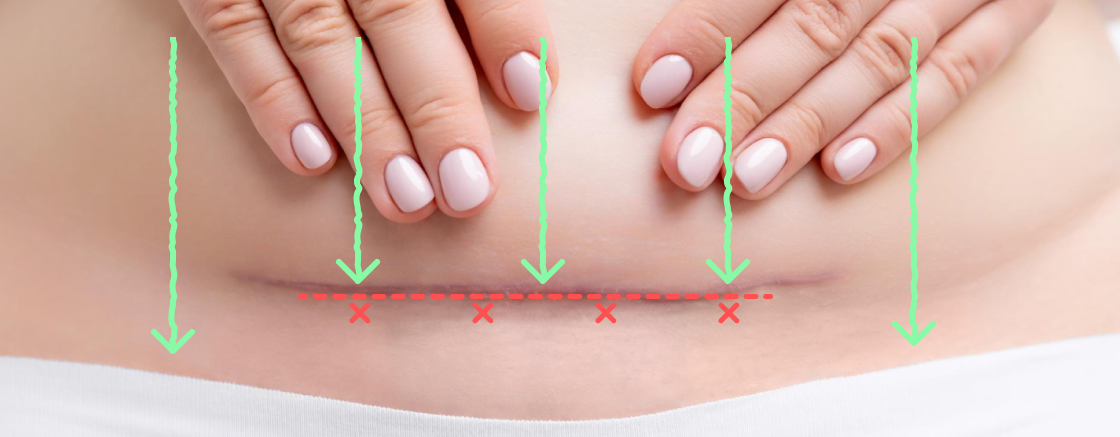
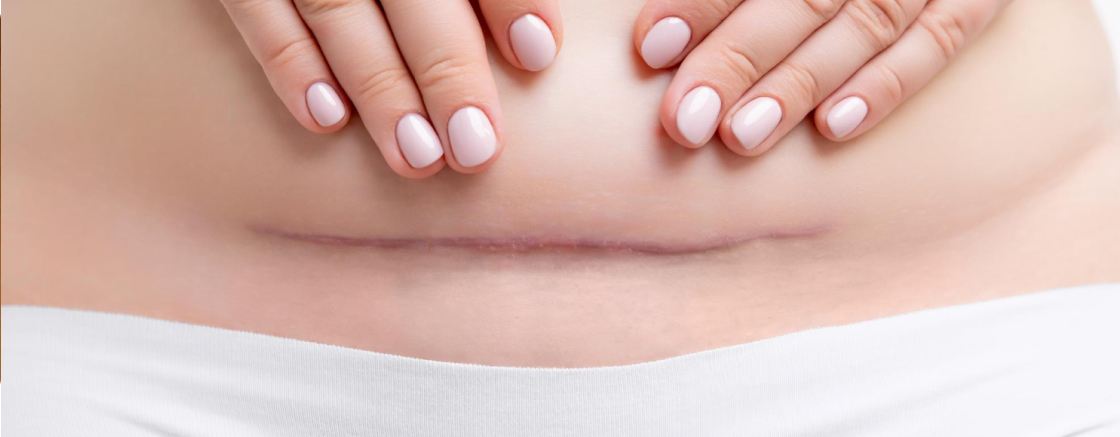
Almost every woman who has undergone a Cesarean delivery is familiar with the stubborn fold or pocket of tissue that eventually forms just above the scar line. While it is frequently blamed on an accumulation of fat or permanently stretched skin—often leaving women feeling at fault for a lack of exercise or a love of sweets—the biological reality is completely different: the "shelf" is caused by a manual blockage of your natural lymphatic drainage pathways.
In other words: it is not your fault. Let’s look closer at what is actually happening beneath the skin.
In the lower half of the abdominal area, the lymphatic system relies on gravitational forces to drain fluid from the belly button downward into the inguinal lymph nodes located along the bikini line and groin area. A C-section surgery creates a new horizontal scar positioned directly in the path of this natural downward drainage.
During the procedure, the incision penetrates through all seven distinct layers of tissue—including skin, adipose tissue, muscle, and fascia. As the body initiates its natural healing cascade, it rapidly deposits dense, unorganized collagen fibers to close the wound. This is how a tight, fibrous scar is formed.
Once healed, this scar line can become so rigid that it acts like a dam, blocking the natural flow of lymphatic fluid. The fluid begins to pool and accumulate just above the scar line. While this may not be visible immediately after surgery, it begins to surface sooner or later—especially in individuals who are naturally prone to water retention.
Over time, this stagnant pocket of fluid expands, stretching the overlying skin. This chronic accumulation of fluid triggers a localized inflammatory and survival response in the body, which can lead to the formation of protective adipose (fatty) tissue in that exact area. This is how the "shelf" is structurally created. It has nothing to do with your diet or how many hours you spend in the gym; it is a mechanical blockage of your lymphatic system by surgical scar tissue.
The Diastasis Recti Complication
If your pregnancy also involved Diastasis Recti (the separation of the rectus abdominis muscles), this structural issue compounds. A weakened, separated abdominal wall combined with a rigid, anchored scar tissue line creates an unyielding structural tug-of-war. The restriction pulls tightly against vulnerable, stretched tissue, making the shelf more pronounced and significantly delaying your functional core recovery.
Our Non-Invasive Clinical Approach: Remodeling & Decompression
Fibrous post-surgical adhesions do not resolve on their own over time. However, the surrounding tissue remains highly adaptive and can be mechanically remodeled.
This is our focus at INTUNE: we remodel the rigid adhesions that have formed around the scar via a precise, non-invasive manual process. Because this is fundamentally a fluid and lymphatic issue, we bind this structural work with advanced lymphatic drainage. For many women, this integrated approach is the essential first step toward regaining proper abdominal functionality and a smoother appearance.
In many cases, early and targeted manual intervention can prevent the need for further surgical revisions, saving you from undergoing another procedure and acquiring a much larger scar.
What to Expect From the Protocol:
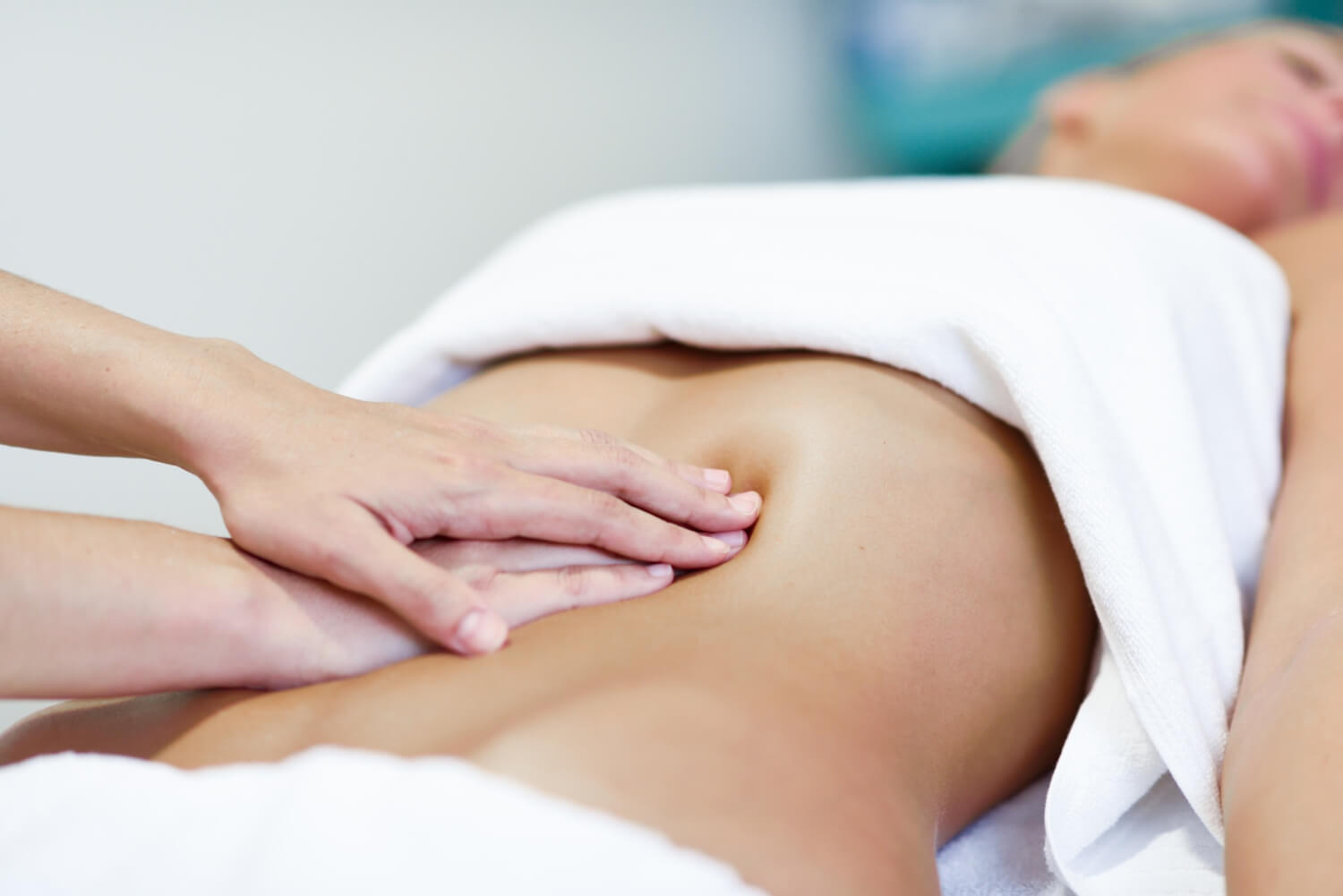
Manual Adhesion Release: Using precise, targeted, and gentle manual manipulation, we carefully un-anchor the rigid, bound layers of tissue to break down internal micro-adhesions.
Lymphatic Pathway Clearing: Once structural decompression is achieved, specialized Manual Lymphatic Drainage (MLD) techniques are deployed to open alternative and existing lymphatic pathways, clearing stagnant fluid back into systemic circulation.
Immediate Structural Relief: By restoring the natural sliding mechanics of your fascial planes, you will feel the abdominal wall become noticeably softer, lighter, and more pliable right from your very first session.
How many sessions are required to modify scar tissue?
Immediate Benefits: You will notice structural benefits and a softening of the tissue starting from your very first session.
Optimal Timeline: Most significant structural changes are achieved within 3 sessions, though this depends on the maturity of the scar and your individual tissue response.
Frequency: Sessions should be scheduled closely together—ideally once per week—to maximize the cumulative effect of the lymphatic drainage.
Indications & Long-Term Benefits
This non-invasive clinical intervention is highly effective for both recent scars (once fully closed, healed, and medically cleared, at least 6 months post-surgery) as well as older, mature C-section scars.
Clinical Benefits & Structural Outcomes:
Decompresses Restricted Fascial Nets: Breaks down internal micro-adhesions to restore natural tissue elasticity and movement.
Smooths and Flattens the "Shelf": Noticeably reduces the stubborn fold by clearing long-term, localized fluid stagnation.
Promotes Deep Core Muscle Activation: Relieves the structural tug-of-war pulling against the abdominal wall, supporting postnatal core recovery.
Re-Establishes Healthy Fluid Dynamics: Opens microscopic lymphatic channels to improve long-term tissue health and prevent future abdominal distortion.
Standard of Care & Practical Details
Initial Evaluation: Every treatment protocol begins with a meticulous assessment of your scar architecture, tissue boundary mobility, and abdominal wall integrity to safely customize the depth and technique of the session.
Medical Cooperation: At INTUNE, we welcome collaboration with your OB-GYN, physiotherapist, or postnatal care team to ensure this protocol seamlessly aligns with your broader recovery timeline.
Duration & Structure: This comprehensive service combines both Scar Remodeling and a Lymphatic Reset. To be fully effective, it is structured over a course of at least 3 sessions. The first session includes your clinical consultation and runs slightly longer, while the subsequent two sessions are highly focused, targeted treatments.
Standalone Options: If preferred or medically indicated, Scar Remodeling can be requested on its own as a standalone treatment without the full lymphatic drainage protocol.
Other Scar Types & Systemic Tensions
Our bodies carry many types of scars from surgeries, injuries, or accidents. It is incredibly common for individuals to experience chronic numbness, hypersensitivity, or a cold sensation around a scar for years after it has healed.
Because fascia is a continuous web, a single rigid scar can block regional lymphatic drainage and pull tightly on surrounding tissues, creating a ripple effect of restriction that impacts your posture and movement. We can work through these deep fascial tensions by applying these exact same specialized remodeling methods to other areas of the body.
Consultation: Please book an initial appointment to evaluate your specific scar architecture and discuss how this clinical method can help restore your comfort, mobility, and fluid flow.
Ready to experience INTUNE?
Book your first session to see the difference in how your scar feels immediately after.